
Your First Puppy in Hoboken: What No One Tells You

Updated: Feb 22
A complete guide to raising a happy Hoboken dog from a dog walker with 15 years of experience.

Bringing home a puppy in Hoboken is exciting… and quietly terrifying.
Between sidewalk hazards, parvo risk, potty training in a walk up, and figuring out how to work a full time job with a baby animal at home, most new owners feel overwhelmed within a week.
I’ve been walking dogs in Hoboken for 15 years. I’ve watched hundreds of puppies grow up in this town. I’ve seen the ones who thrive, the ones who struggle, and the owners who burn out before their dog is even a year old.
This guide is everything I wish every new puppy owner knew on day one.
Whether you’re still thinking about getting a puppy or already have one curled up on your floor right now, this is your city specific roadmap.

Thinking About Getting a Puppy in Hoboken?
Before we talk schedules, crates, or leashes, we need to start one step earlier.
Hoboken is not neutral terrain for dogs.
It’s dense. Loud. Stimulating. The sidewalks are busy. Space is limited. Many homes are walk ups. Your dog will encounter scooters, buses, strollers, sirens, skateboards, pigeons, elevators, and strangers every single day.
Some dogs adapt beautifully to this environment. Others struggle in ways that aren’t obvious at eight weeks old.
High drive breeds like Australian Shepherds, Belgian Malinois, working line German Shepherds, Huskies, and dogs with strong prey drive require significantly more structure, stimulation, and consistency than most first time owners realize. These dogs were bred to work all day. In a small apartment with a single daily walk, they often become anxious, destructive, reactive, or depressed.
That doesn’t make them “bad dogs.” It makes them mismatched dogs.
The most heartbreaking situations I see in Hoboken are not abuse cases. They’re good people with the wrong dog for their lifestyle.
If you’re adopting, make sure you’re working with a reputable rescue that knows the dog’s background and temperament. Be cautious of “retail rescues” that function like pet stores in disguise. Puppies sourced from mills and flipped through glossy storefronts often come with health and behavioral issues that don’t show up until months later.
Ask real questions. Meet the foster. Learn about the parents if possible. A responsible rescue will care more about fit than speed.
Choosing the right dog is the first act of good training.

Your First Week With a Puppy in Hoboken
The first week sets the tone for everything.
Expect chaos. Expect interrupted sleep. Expect accidents. Expect to question your decision at least once.
This is normal.
Your puppy has just been removed from everything familiar. New smells. New sounds. New human. New rules. Their nervous system is on fire.
What they need most is predictability.
Wake up at the same time
Potty at the same intervals
Meals on a schedule
Rest in a consistent place
Calm, boring nights
Crates and playpens aren’t about control. They’re about safety and clarity. A puppy who never rests never learns how to settle. In a small apartment, boundaries create peace for both of you.
And yes, your neighbors will hear something. That’s part of city life. What matters is that the noise has structure and improvement, not chaos and confusion.
Vaccines, Parvo, and Sidewalk Safety
This is where city puppies differ most from suburban ones.
Hoboken sidewalks carry risk. Parvo is real. It’s devastating. It lives in high traffic areas where unvaccinated dogs pass through.
Your vet will guide you, but in general:
Avoid heavy dog areas until core vaccines are complete
Use a carrier, stroller, or sling for exposure without risk
Let your puppy observe the world without touching it
Socialization does not mean “on the ground.” It means experience. Sights, sounds, motion, people, distance. You can build confidence without gambling on health.
The puppies who do best long term are the ones who were introduced to the city slowly and safely.

Puppy Training in a City Environment
City dogs don’t just need manners. They need emotional resilience.
They must learn to:
Walk past food scraps
Ignore strangers
Stay calm around noise
Recover quickly from surprises
Focus despite stimulation
“Sit” is easy. Emotional regulation is the real skill.
Training in Hoboken is less about tricks and more about:
Leash pressure tolerance
Startle recovery
Frustration control
Confidence in motion
A well trained city dog isn’t robotic. They’re composed.

The Imprint Window: What You Teach Now Lasts Forever
There is a short, powerful window in your puppy’s life where the world is being “written” into them.
This imprint period happens in the first few months. What your dog learns during this time doesn’t just become familiar. It becomes normal.
Rain. Wind. Umbrellas. Buses. Sirens. Skateboards. Elevators. Other dogs at a distance. Crowds. Construction noise. Stairs. Door buzzers.
If these things are introduced gently and consistently, your dog grows up thinking:
“This is just life.”
If they’re avoided, delayed, or rushed all at once, your dog learns:
“This is dangerous.”
The goal isn’t flooding. It’s exposure with safety.
Let your puppy watch traffic from a bench
Carry them in light rain so it becomes boring
Stand near, not inside, busy areas
Walk past other dogs without greeting
Let them hear sirens from afar while you stay calm
Your emotional state becomes their emotional template.
A dog who learns “I can handle this” becomes a dog who moves through the city with confidence.
A dog who learns “this is scary” becomes reactive, hypervigilant, or shut down.
What you imprint in these months doesn’t fade.
It becomes your dog.
Boundaries, Behavior, and the Art of Raising a Polite City Dog
One of the most common phrases I hear from new puppy owners is:
“They’re just a baby.”
It’s said with love. It’s also how bad habits are born.
Puppies don’t magically grow out of behaviors. They grow into them.
What’s cute at twelve pounds becomes a problem at sixty.
Your puppy should not be allowed to:
Jump on people
Bite hands, sleeves, or ankles during play
Pull you down the street
Demand attention through barking
Treat furniture as a jungle gym
Ignore you outside
Even as a baby.
You’re not being mean. You’re teaching them how to exist in a shared world.

What Proper Socialization Actually Means
Socialization is not “letting everyone pet your puppy.”
In fact, overexposure often creates reactivity.
Good socialization is about teaching your dog how to observe calmly.
It looks like:
Sitting on a bench and watching bikes go by
Standing across the street from kids playing
Walking past another dog without greeting
Hearing sirens without panic
Seeing strangers without expectation
A well socialized dog isn’t excited by everything.
They’re neutral.
That neutrality is gold in a city.
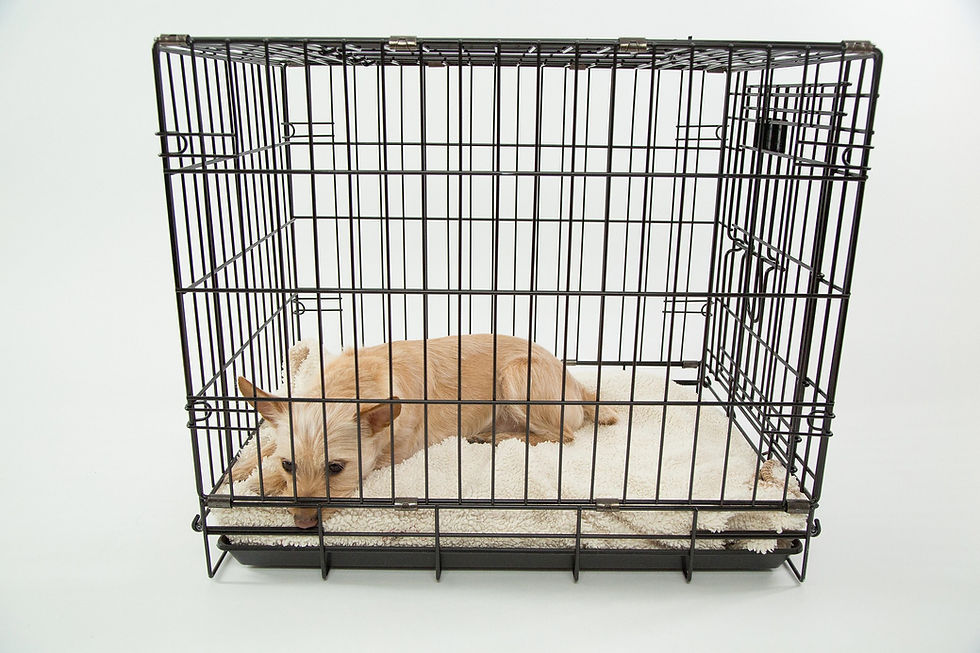
Why Crates Are a Gift, Not a Punishment
Crates are one of the most misunderstood tools in dog ownership.
They’re not cages. They’re bedrooms.
Dogs are den animals by nature. A properly introduced crate becomes a place of safety, not confinement.
Crates teach:
How to settle
How to self soothe
How to rest without stimulation
That separation is normal
That boundaries exist
In small apartments, this is priceless.
Without a crate or pen, puppies often become shadow dogs. They never learn independence. They pace. They whine. They panic when you leave.
With a crate, they learn:
“This is my space. This is where I relax. The world will come back.”
Boundaries don’t make dogs unhappy.
They make dogs secure.
How Much Time a Puppy Really Needs
This is the part most people underestimate.
Puppies can’t “hold it.” They can’t self regulate. They can’t entertain themselves for eight hours.
In the early months, your puppy needs:
Morning potty and movement
Mid morning relief
Midday interaction
Afternoon structure
Evening engagement
A single lunchtime visit is rarely enough for a young dog in an apartment.
When care is compressed, puppies adapt in unhealthy ways:
holding too long, chewing walls, barking, or developing anxiety.
The emotional toll is real. Guilt. Exhaustion. Resentment.
That’s not failure.
That’s mismatch.
Do You Need a Dog Walker?
Not everyone does. The right setup depends on your schedule, energy, and expectations.
But you likely benefit from help if:
You work full time outside the home
You’re skipping meals or sleep
You feel behind every day
Your puppy is regressing
You’re “just trying to get through”
A good walker doesn’t just provide a bathroom break. They reinforce rhythm. They stabilize the dog’s day. They become part of the puppy’s world.
Common Mistakes I See Hoboken Puppy Owners Make
Waiting too long to ask for help
Over socializing too fast
Letting bad habits “slide”
Treating the dog like a roommate instead of a student
Assuming behavior will “fix itself”
Dogs don’t grow out of patterns.
They grow into them.

A Healthy City Puppy Routine
A balanced weekday often looks like:
7:00 AM – Potty and short walk
8:00 AM – Breakfast and calm play
10:30 AM – Relief break
1:00 PM – Walk and enrichment
2:00 PM – Relief break
6:30 PM – Dinner
7:30 PM – Calm walk
9:30 PM – Final potty
This isn’t rigid.
It’s rhythmic.
Dogs don’t crave novelty.
They crave knowing what comes next.
Structure is kindness.
Final Thoughts: Raising a City Dog With Intention
Getting a puppy in Hoboken is not just adding a pet.
It’s choosing a lifestyle.
Your dog will mirror your rhythm. Your habits become their universe. Your stress becomes theirs. Your calm becomes theirs.
You don’t need perfection.
You need awareness.
The best dog owners I know aren’t flawless. They’re thoughtful. They notice. They adjust. They ask for help.
City dogs can be some of the most emotionally intelligent, adaptable, bonded animals in the world.
But they don’t become that by accident.
They become that because someone decided to raise them with intention.
This article is based on the author’s real world experience and professional observations. AI tools assisted in structuring the article for readability, organization and flow.


